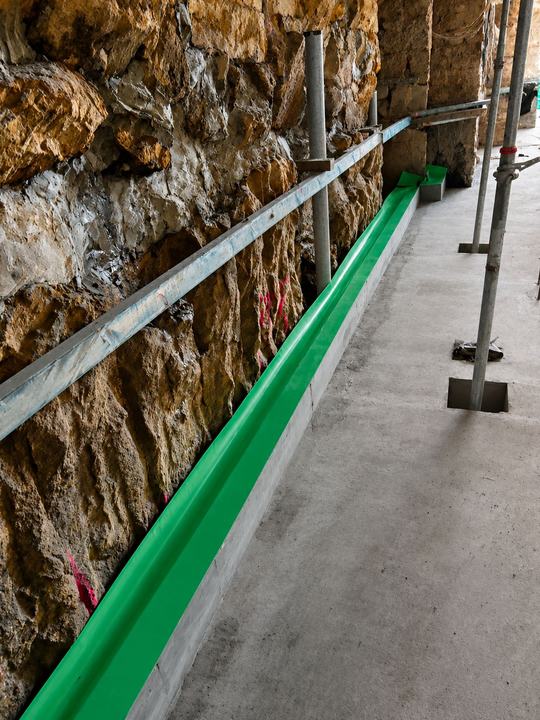
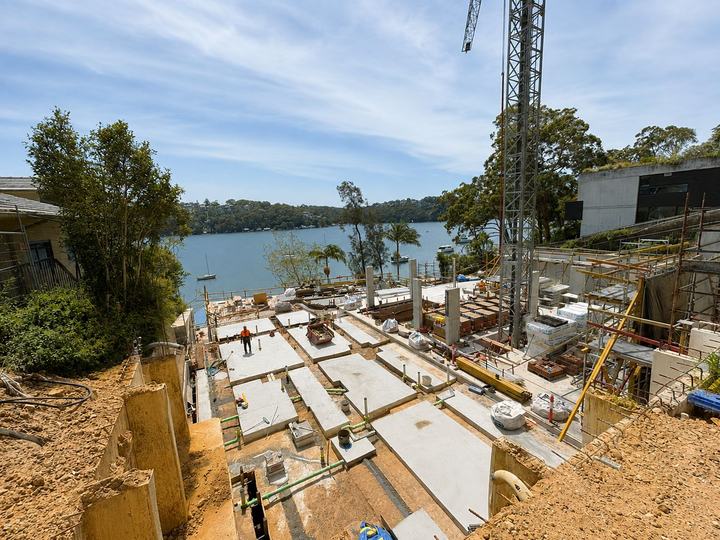
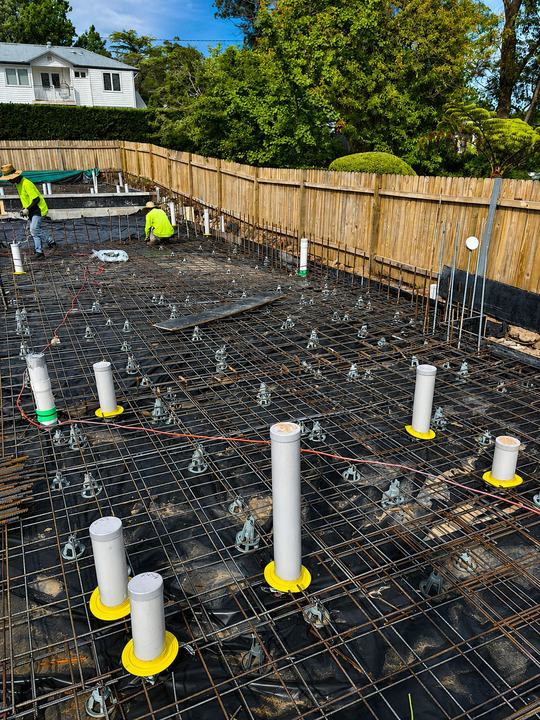
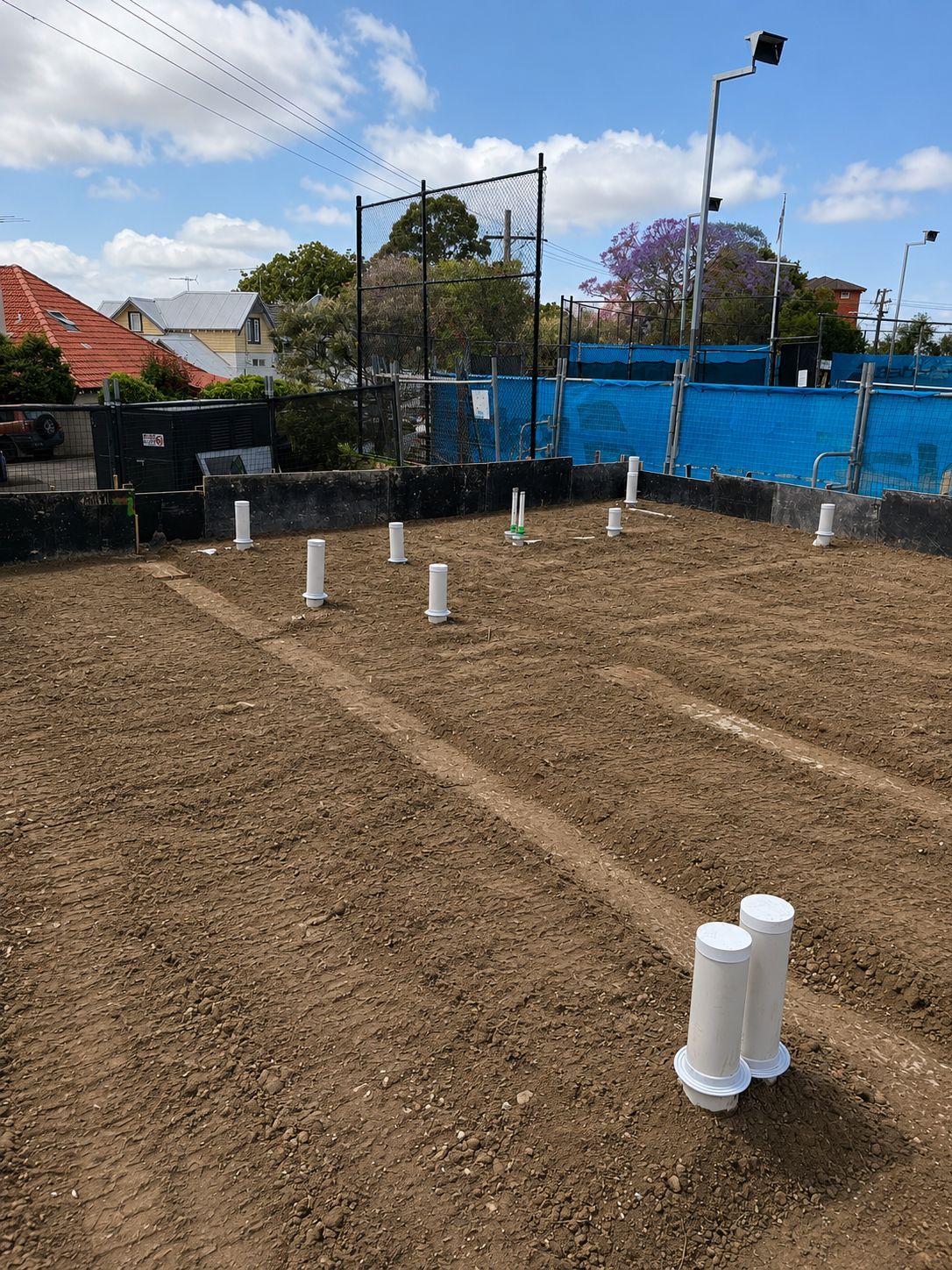
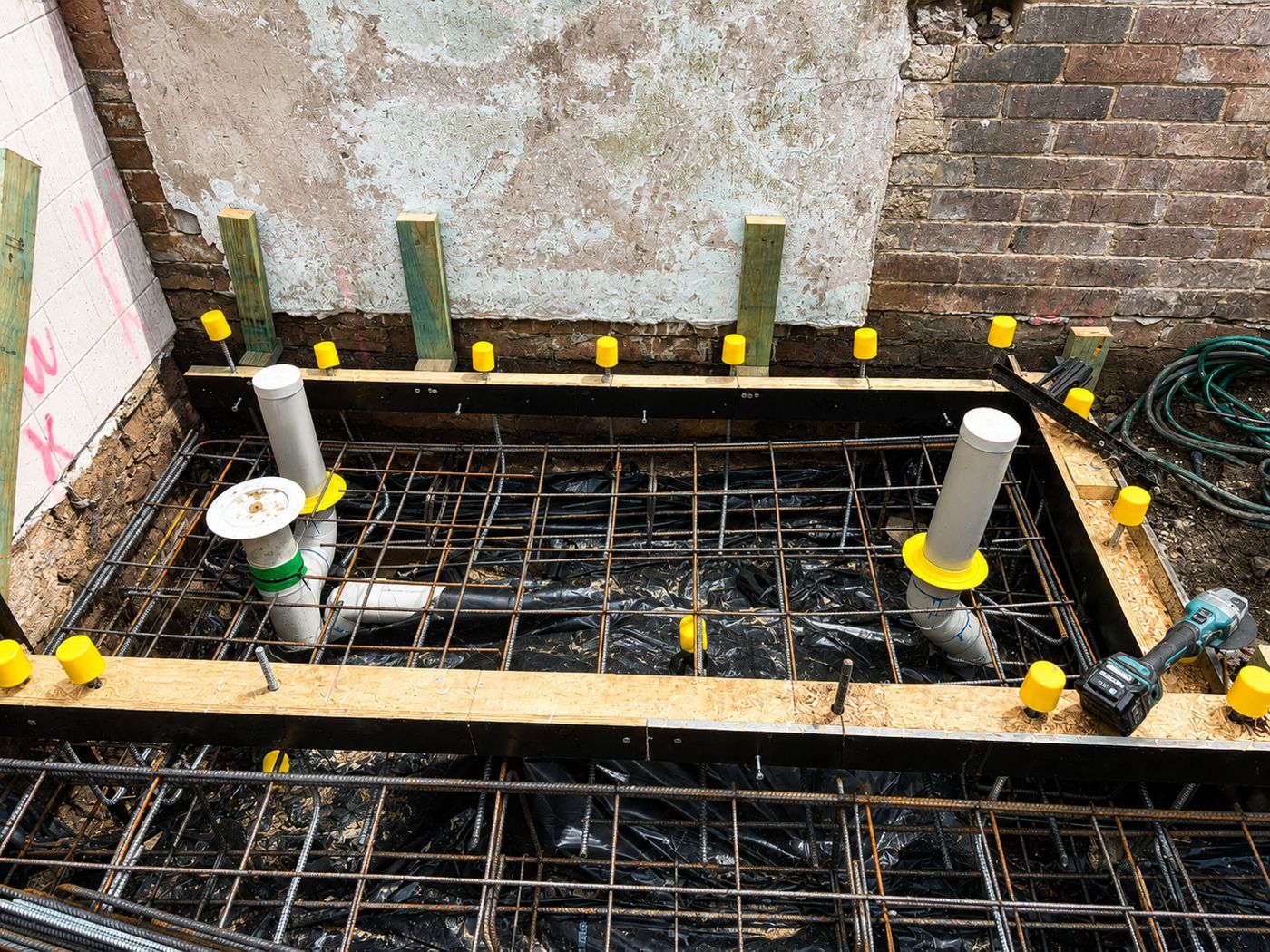
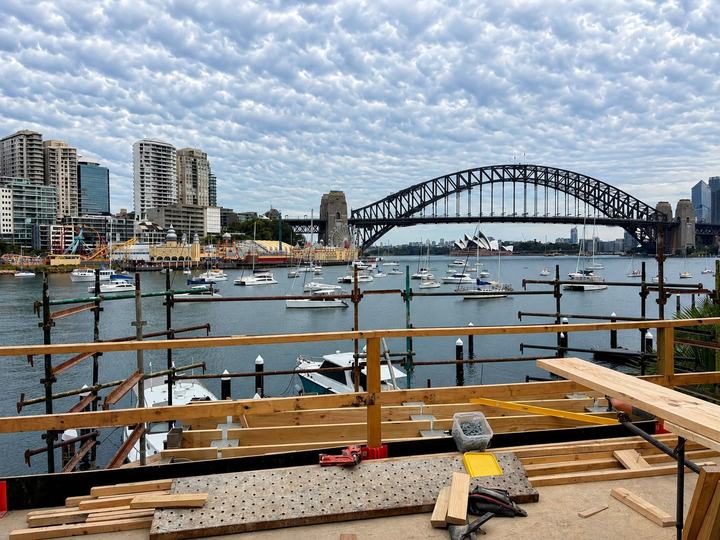
Termite barriers fitted before the pour on Collaroy Plateau rebuilds along the ridge, where native banksias and wattles surround houses looking down over Long Reef and Narrabeen Lagoon.
Yes, a new home or rebuild on Collaroy Plateau needs a compliant termite system as part of the build, not as an afterthought. The ridge sits in a termite-prone part of Sydney's northern beaches, so AS 3660.1 detailing is required, with collars fitted and any perimeter work finished before the pour. Northern Beaches Council then needs the meter box notice and installer's paperwork before it will release an Occupation Certificate.
Termite barriers in Collaroy Plateau
Why Collaroy Plateau builds need the barrier in before the pour
Collaroy Plateau is an elevated residential suburb in postcode 2097, about 17.2 km north-east of the Sydney CBD, under Northern Beaches Council. It became a separate suburb from Collaroy in 2011 after local lobbying, and from its ridge homes overlook Collaroy Beach, Long Reef, Narrabeen Beach and Narrabeen Lagoon. The suburb holds a trig station, the site of a Second World War radar station, Plateau Park, McLeans Lookout and the Edgar Gornall Wildflower Garden, and native dry sclerophyll vegetation, banksias, waratahs, wattles and tea-trees, is common across the ridge. New work here is mostly a knockdown rebuild or an extension on an established ridge-top block, since the suburb is fully settled, and every one of those projects still needs its own termite management system before the certifier will look at it.
The high ground and the remaining native vegetation are what shape termite risk on Collaroy Plateau, more than the ocean does. Gardens planted with natives or backing onto remnant bush can harbour termite colonies, since banksias, wattles and tea-trees are exactly the kind of vegetation subterranean termites forage through. Homes on the ridge face wind and driving rain, while those lower on the slopes toward Collaroy and Narrabeen often have sub-floors and retaining walls where moisture collects after storms. Streets here are mostly standalone houses rather than units, so a barrier usually has to cover the whole property, roof to garden edge, rather than a single shared slab.
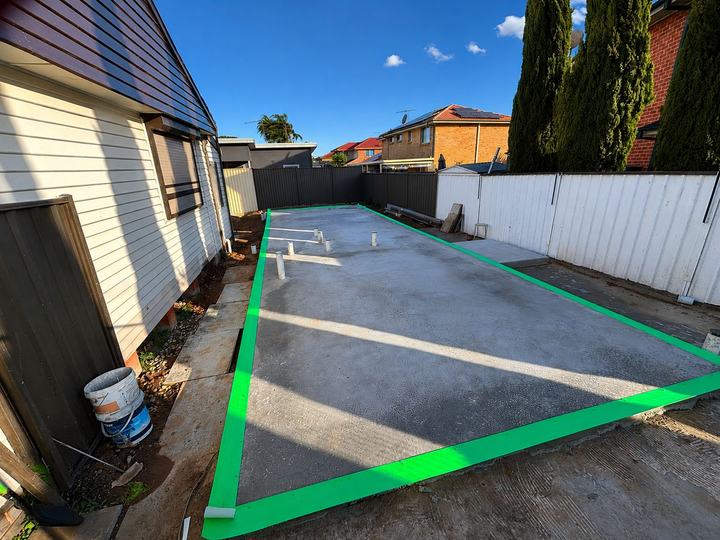
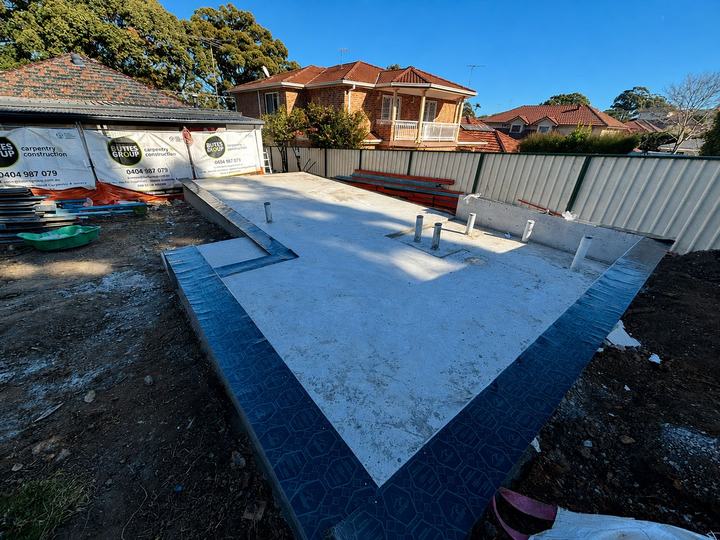
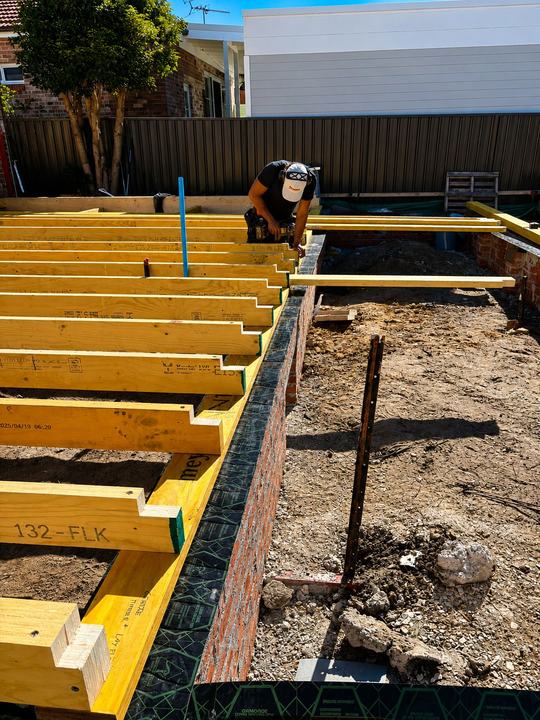
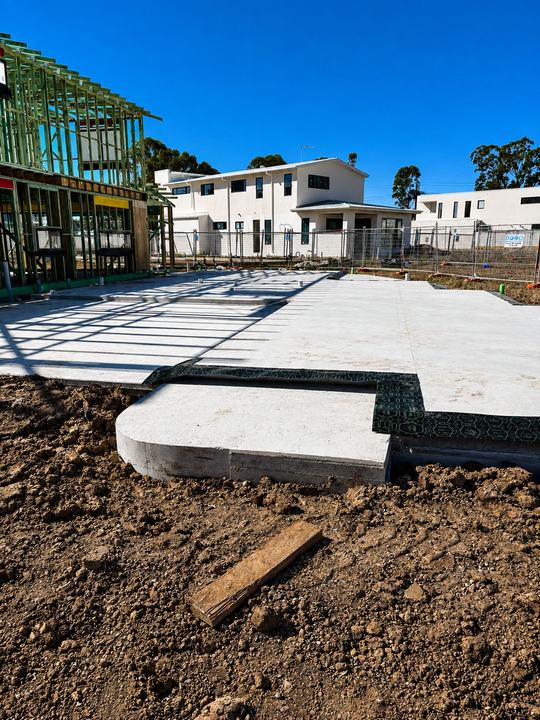
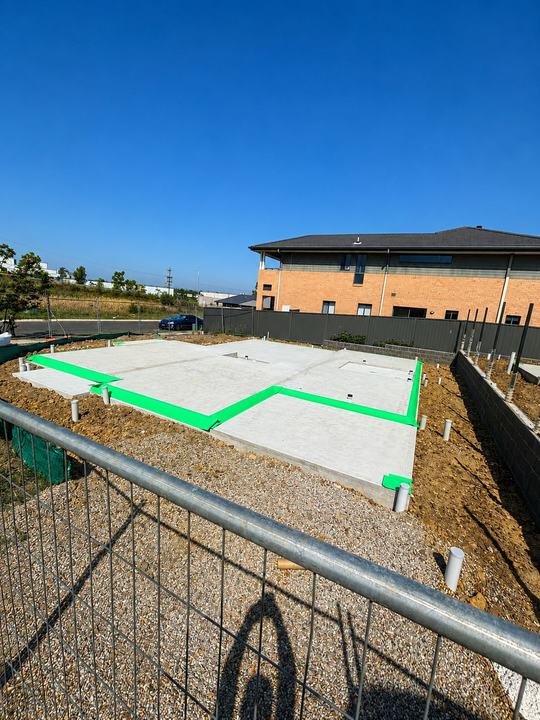
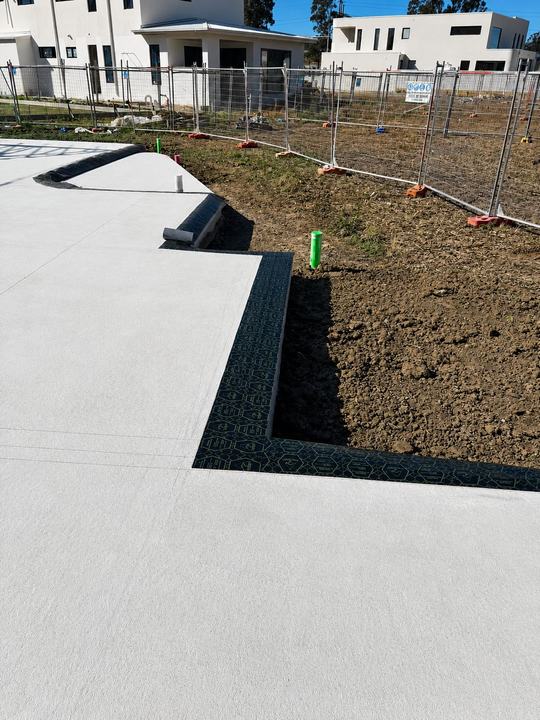
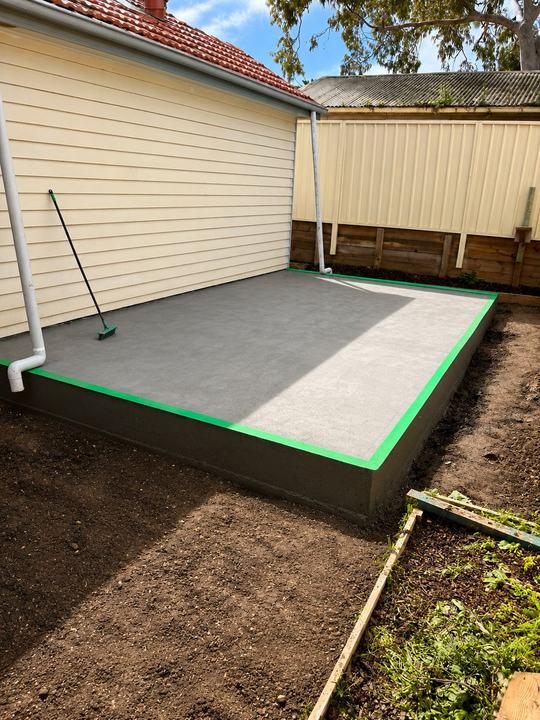
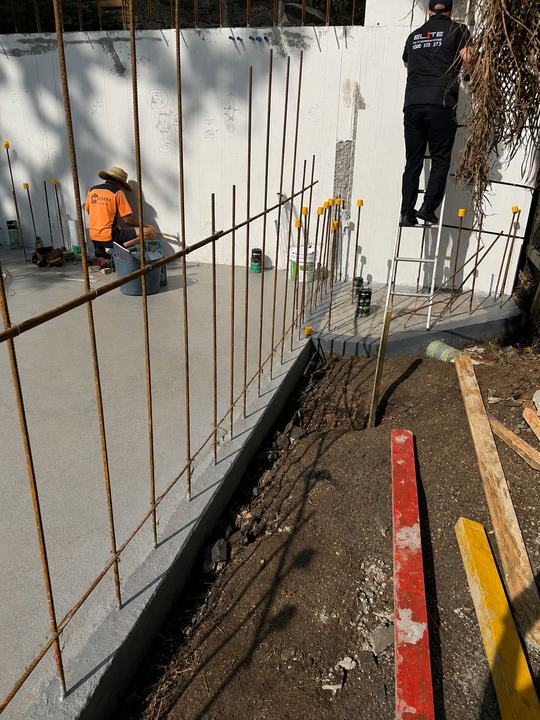
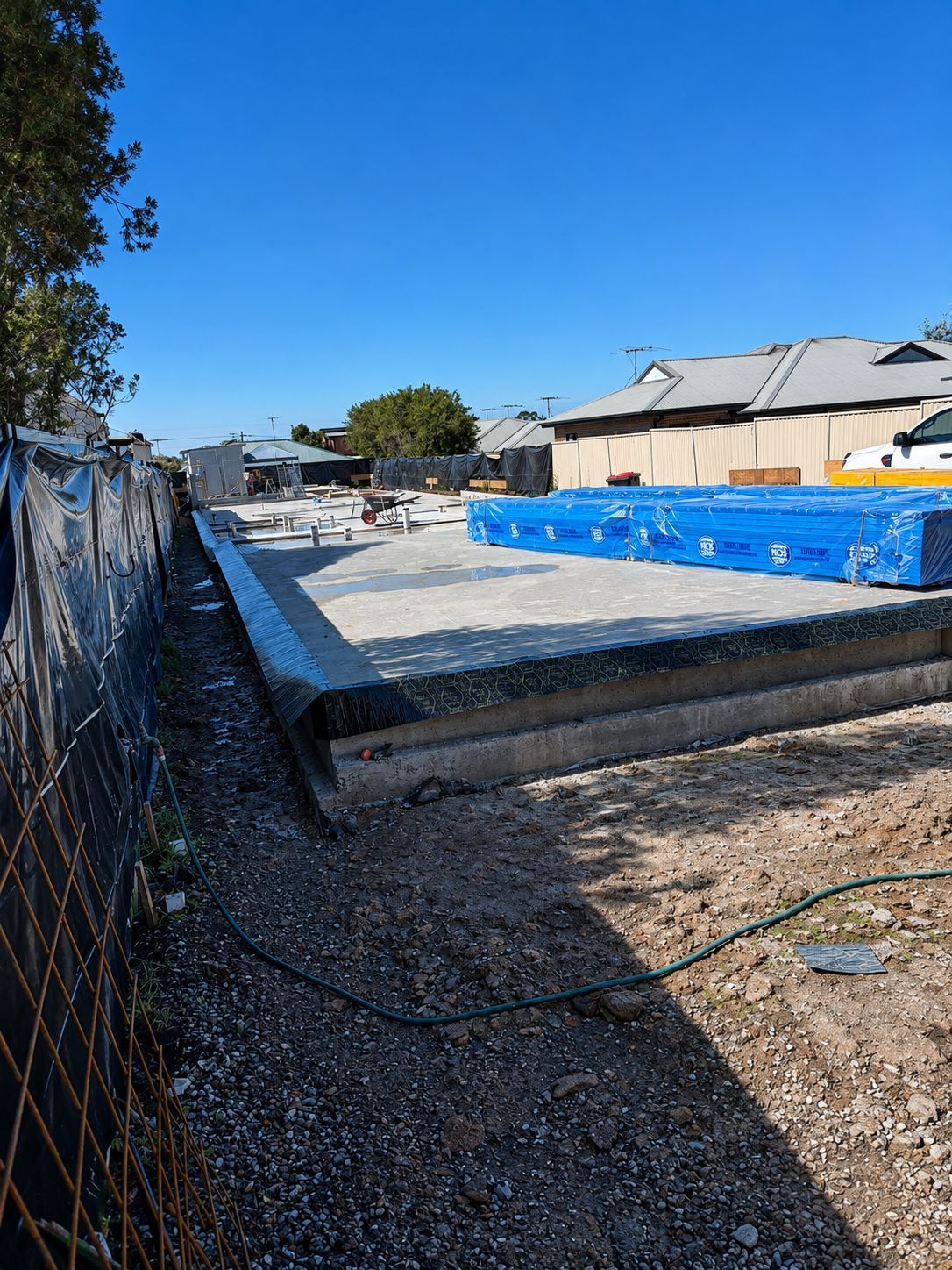
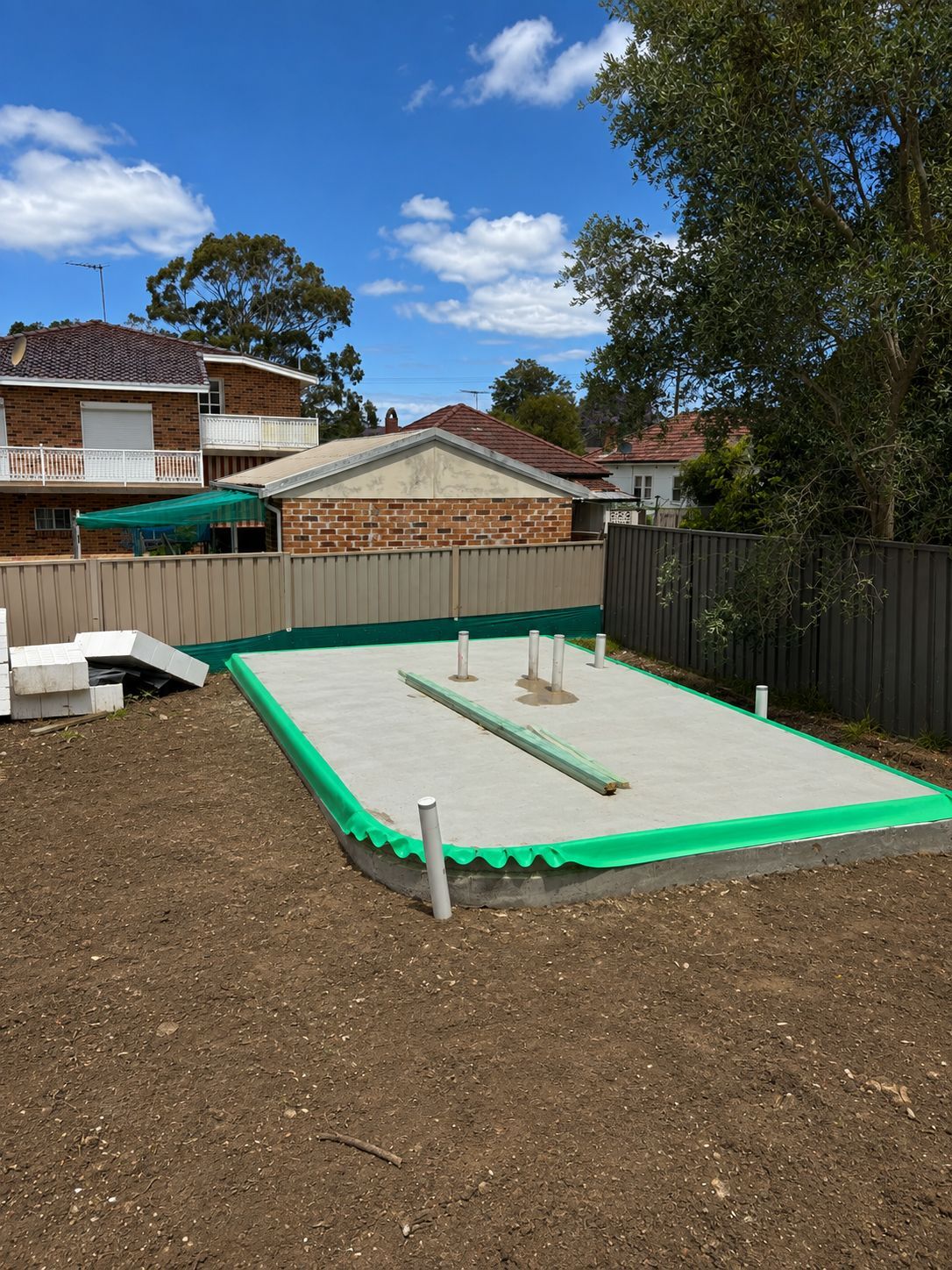
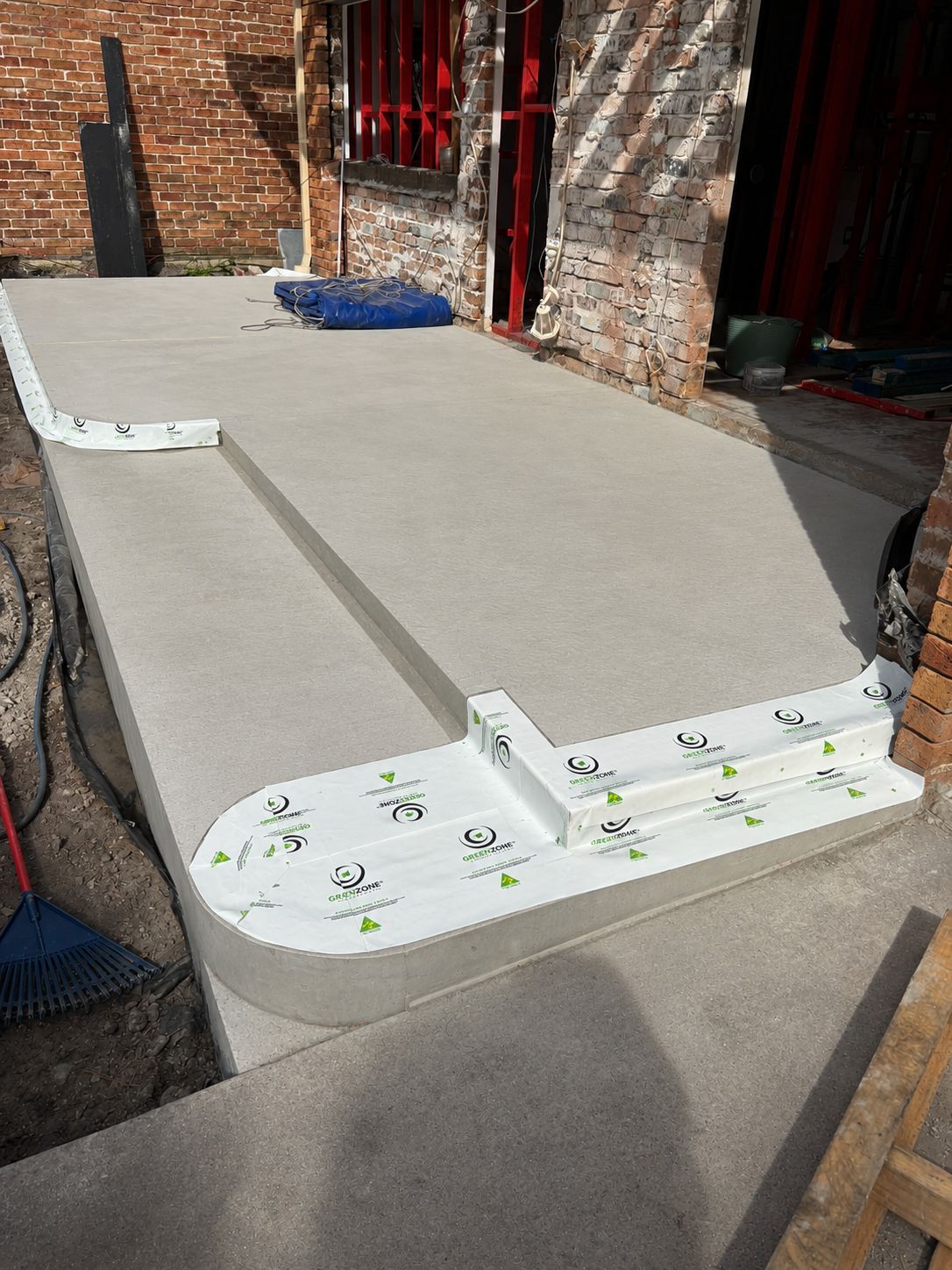
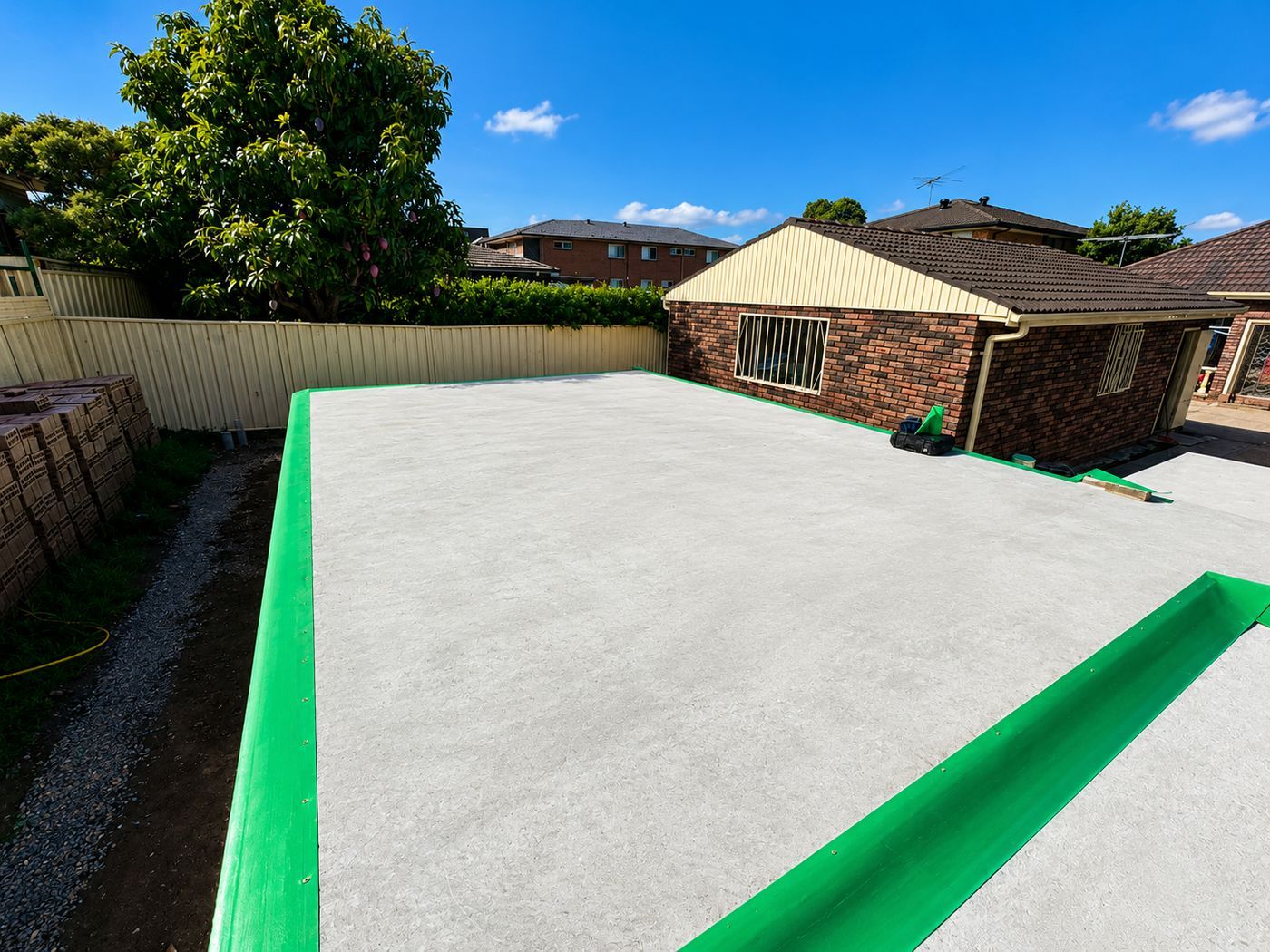
Completed slab with a perimeter termite barrier in place — one of our own Northern Beaches installations.
Local conditions
What makes Collaroy Plateau blocks a termite risk
Three things set termite risk on Collaroy Plateau apart from the beachfront suburbs below it.
Native vegetation on the ridge
Banksias, wattles and tea-trees common across Collaroy Plateau's gardens and remnant bushland are the kind of vegetation subterranean termites forage through naturally. Blocks backing onto denser native planting or bushland get a more thorough perimeter than an open, cleared block.
Retaining walls on the slopes
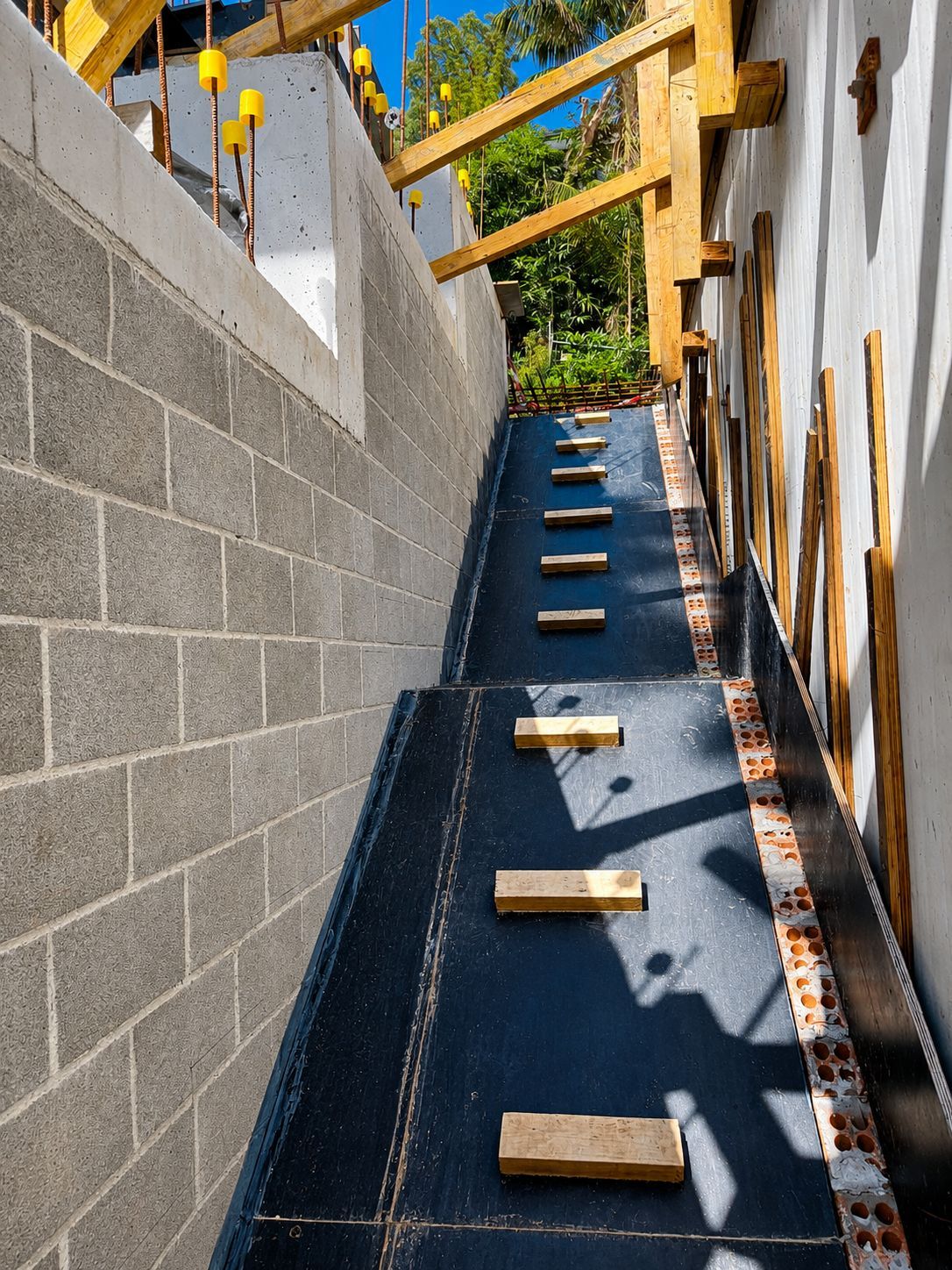
Where a Collaroy Plateau block falls away from the ridge toward Collaroy or Narrabeen, retaining walls and stepped footings are common, and moisture collects at those junctions after storms. Each one needs to be detailed on the barrier plan before the concrete is poured.
Standalone houses, full perimeters
Unlike the denser streets closer to the beach, Collaroy Plateau is mostly standalone houses, so a termite management system typically has to run the whole way around the building rather than covering a single shared slab. We measure the actual perimeter from the plans rather than estimating.
What we install here
Building in Collaroy Plateau
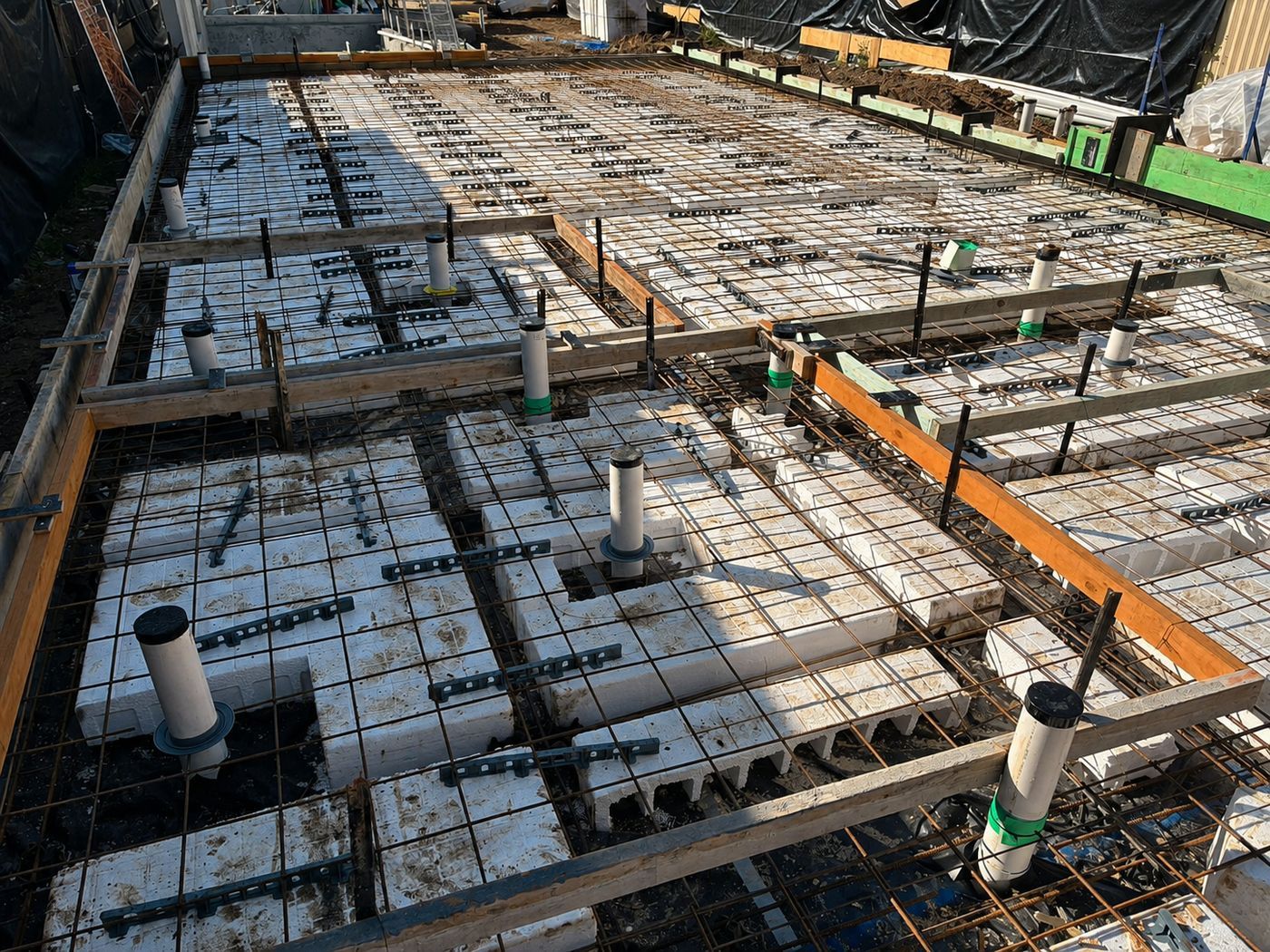
Collaroy Plateau work is almost entirely knockdown rebuilds and extensions on established ridge-top blocks, since there is little vacant land remaining on the plateau. Waffle pod and raft slabs suit the flatter sections of the ridge, while piers and suspended floors are more common where a block steps down toward Collaroy or Narrabeen. We schedule collars and any perimeter work around your plumber's rough-in and your builder's pour date, with particular attention to retaining walls on sloping sites, all priced in one fixed written quote from the plans.
Under-slab membraneA termite-resistant sheet laid across the prepared ground before the pour.
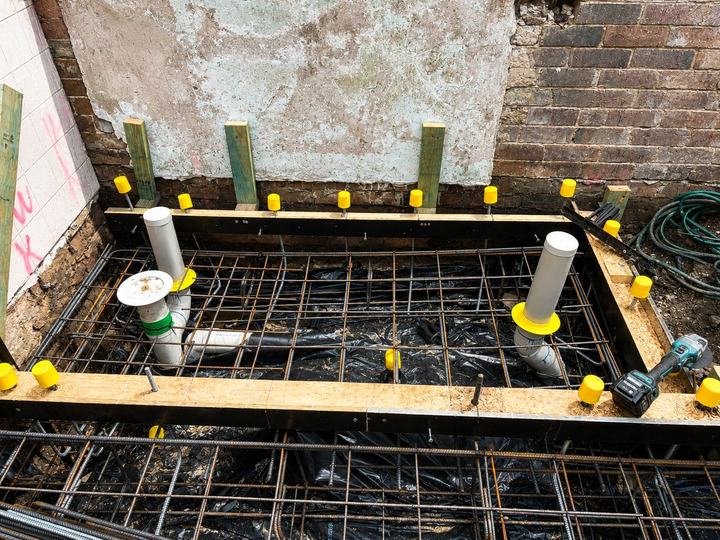
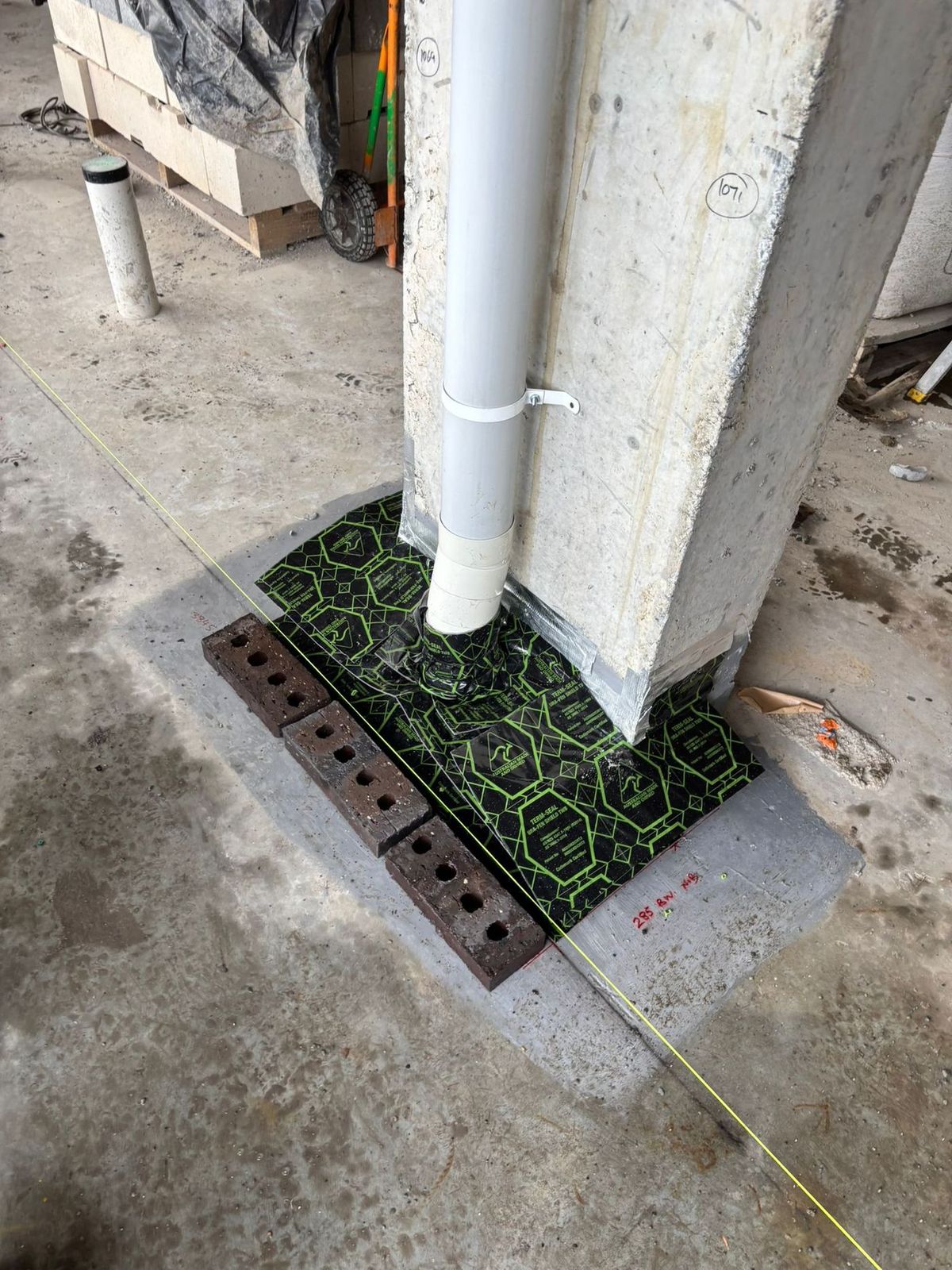
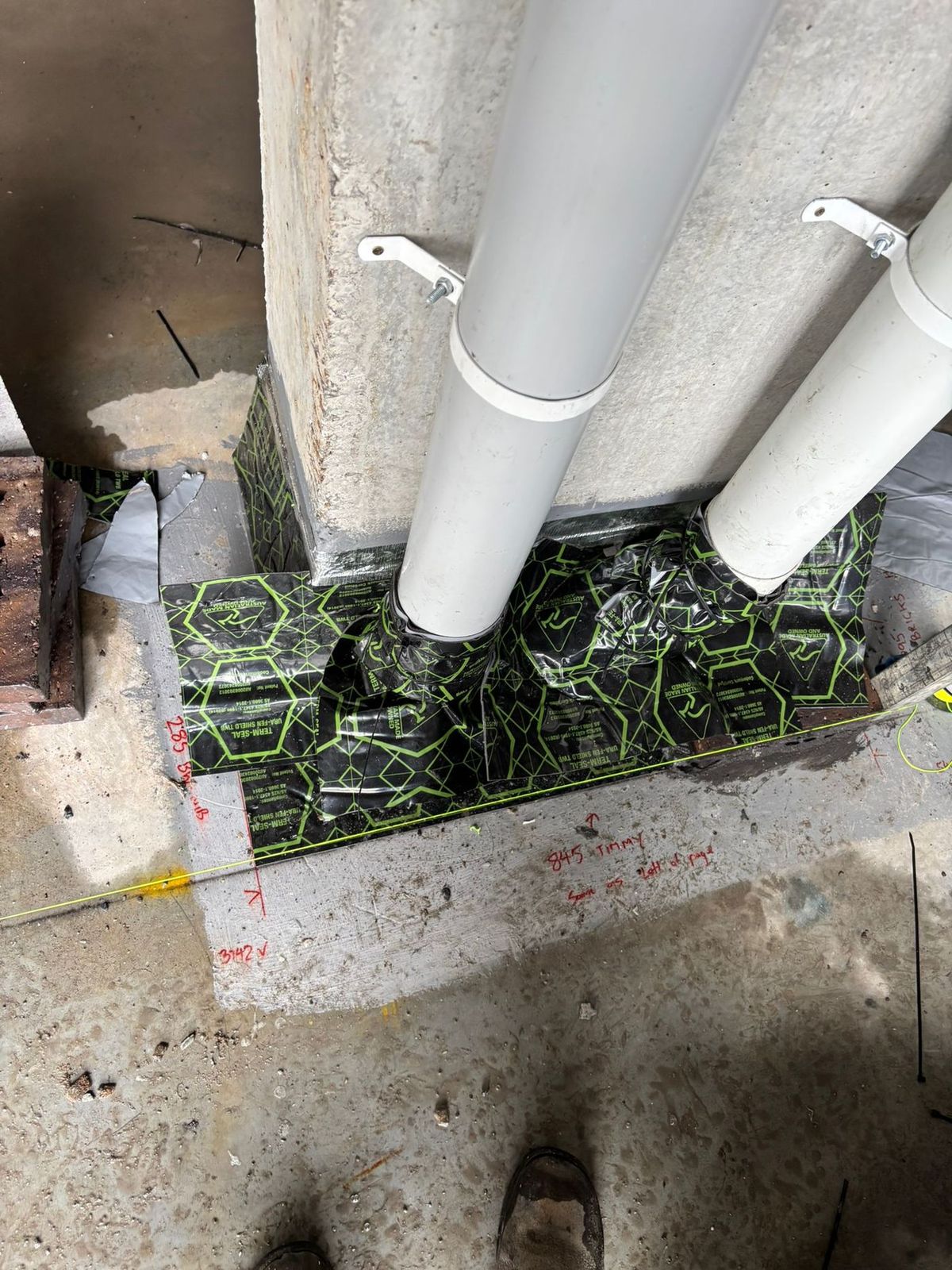
Penetration collarsCollars sealed to every pipe and conduit that comes up through the slab.
Perimeter & slab edgeA barrier at the slab edge and into the cavity, so nothing can track up hidden.
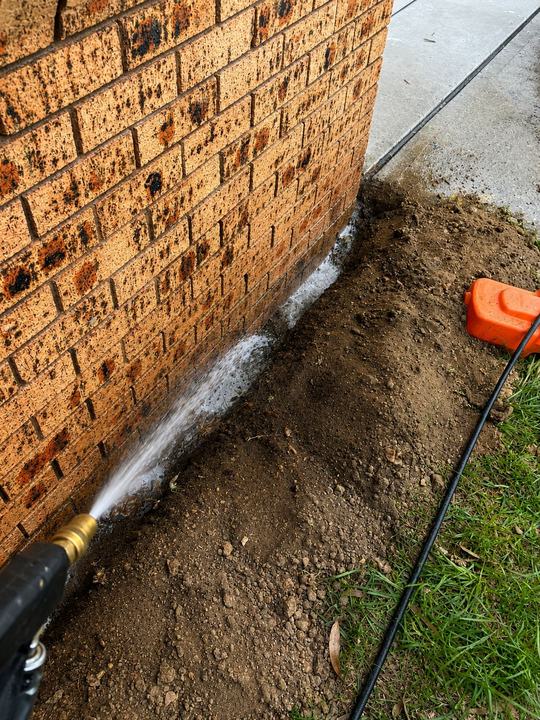
Chemical soil barrierAn APVMA-registered treated zone in the soil under and around the building.
ReticulationA pipe network laid before paving so the treated zone can be topped up later.
Piers & suspended floorsProtection for bearers, piers and suspended timber floors on sloping blocks.
Local knowledge
Around Collaroy Plateau
Augusta Shopping Centre and the Edgar Gornall Wildflower Garden anchor most of our work on the ridge, where dense native planting gives ants, spiders and the occasional colony of termites a foothold close to nearby homes. Plateau Park and the ridge lookouts overlooking Long Reef and Narrabeen Lagoon mark the high point of the suburb, while streets sloping down toward Collaroy Beach, about a kilometre away, see more moisture collecting around retaining walls and stepped footings.
Northern Beaches Council certifies Collaroy Plateau builds, and before releasing an Occupation Certificate it wants a weatherproof notice fitted inside the meter box naming the termite system, along with a signed certificate recording the products used and the licence of the installer. Where a ridge site involves a retaining wall or a suspended floor, we describe that detailing on the certificate too, so it lines up with what the engineer drew.
4 neighbouring suburbs covered by the same crew
Slab date locked in?Tell us the pour date and we will book the stages around your builder.
Most of the Sydney builds we work on use a combination: physical collars on every penetration plus a physical or chemical perimeter.
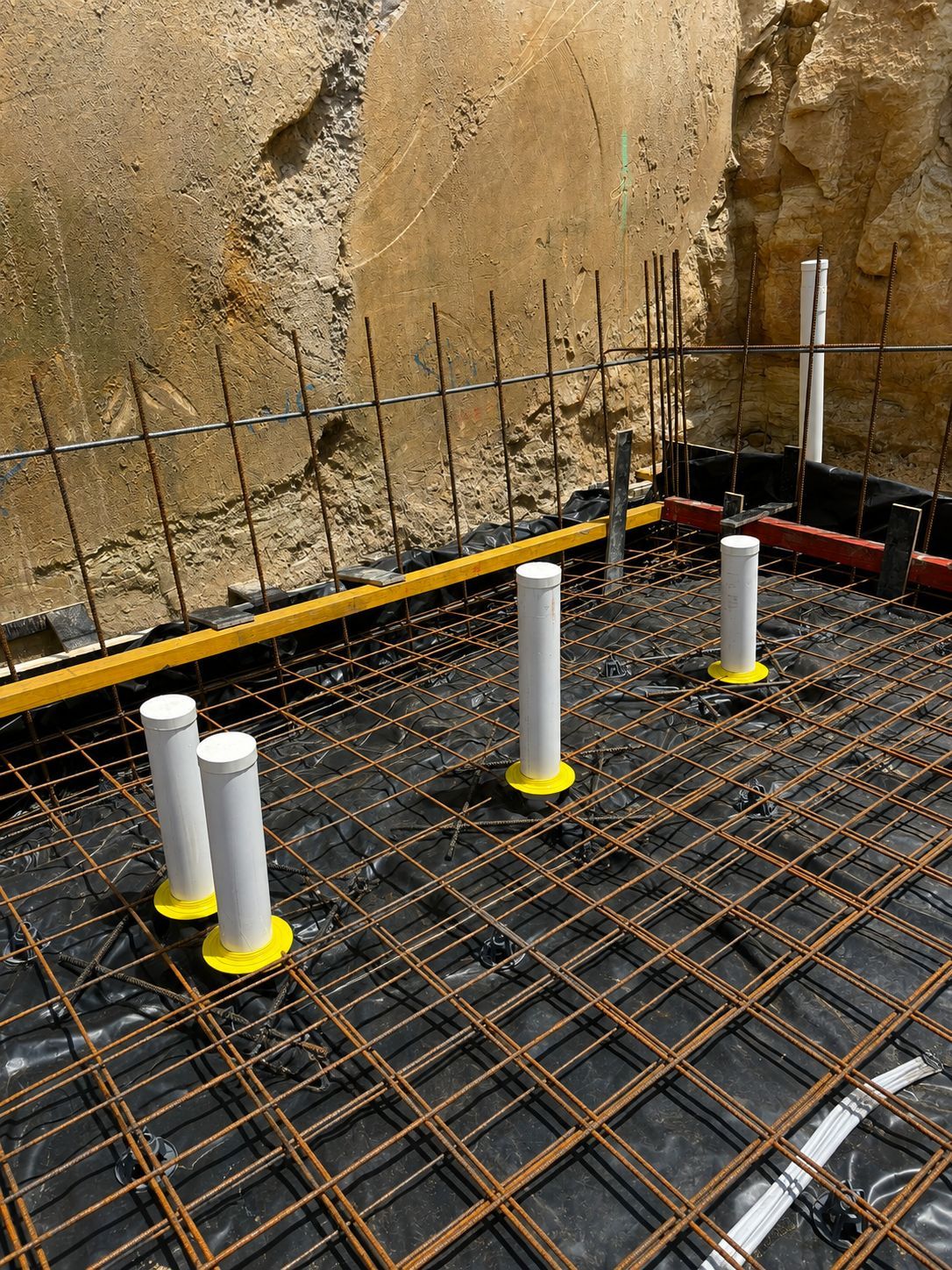
Our technician installing a perimeter barrier on a live Sydney site.
For builders & developers
Built around your program, not ours
Builders, developers and owner-builders get a fixed quote from plans, a technician who turns up when the site is ready, and paperwork that never holds up sign-off.
What we need to quote
Architectural or slab planSlab type: raft, waffle pod or suspendedSite addressRough pour dateRetaining wall & step-down details
Fitting in with your trades
Collars in before the pour inspection
Slab edge & cavity as walls go up
Perimeter done before paving
Multi-unit & repeat work
Consistent pricing across lots, one point of contact and a full document set for every dwelling.
No certification delays
Missing durable notices and unclear install records are a common reason Occupation Certificates get held up. We hand everything over together so your certifier has it all in one go.
Paperwork
Everything you get at handover
A complete document set for the builder, the certifier and every future owner of the property.
Durable notice
A permanent notice in the meter box showing the system, install date, installer, any chemical's life expectancy and inspection advice.
For: certifier, owner, future owners
Installation certificate
Written confirmation of the system and products used, the areas protected and our licence details.
For: builder, certifier, owner
Product information
Details of the physical system or termiticide installed, including safety data sheets for any chemicals.
For: builder, owner
Care & inspection advice
How to keep the system working, plus the recommended inspection frequency under AS 3660.2.
For: homeowner
From real jobs
Recent termite barrier installations
Photos from our own Sydney sites, not stock images. Tap any photo to see it larger.
A barrier only works while it stays intact and visible. Pass these on to the owner.
Keep at least 75 mm of the slab edge exposed. Don't cover it with soil, mulch or paving.
No garden beds or stacked timber against the house
Keep weep holes clear of render and debris
Fix leaking taps, downpipes and hot water units near the walls
Ask the installer before drilling through the slab or adding pipes
Book a timber pest inspection at least every 12 months
The inspection zone. An exposed strip of slab edge lets anyone spot termite mud tubes before they reach the frame, which is why paving, soil and mulch must stay below it.
Annual timber pest inspectionHanded over recently? We inspect the barrier and the building every 12 months.
Do native gardens on Collaroy Plateau attract termites?
Banksias, wattles and tea-trees are part of the natural dry sclerophyll vegetation across the plateau, and subterranean termites forage through that kind of planting as a normal part of the local ecosystem. It does not mean you cannot have a native garden, but blocks backing onto denser bush usually get a more thorough perimeter, and we plan garden beds and mulch placement around the barrier rather than against it.
Why do retaining walls matter for a Collaroy Plateau barrier?
Where a block steps down from the ridge, retaining walls and stepped footings add junctions to the barrier that a flat, single-level block never has, and moisture collecting behind a wall after storms can support termite activity right at that joint. We mark every step-down and wall junction on the plan first and work to that, rather than making decisions on the day of the pour.
Is Collaroy Plateau's termite risk the same as Collaroy's?
No, the risk drivers differ even though the suburbs are neighbours. Collaroy's beachfront blocks deal with salt spray and storm-disturbed ground, while Collaroy Plateau's risk comes mainly from native vegetation and the retaining walls needed on its sloping, elevated blocks. We assess each property on its own conditions rather than applying the same system across both suburbs.
Does a new home need a termite barrier in NSW?
In most cases, yes. The National Construction Code requires a termite management system for new houses and outbuildings in termite-prone areas where the primary building elements can be damaged by termites. Sydney is termite-prone, so the system is installed to AS 3660.1 and your certifier asks for the installation certificate and durable notice before the Occupation Certificate is issued.
What does a pre-construction barrier cost?
It depends on slab area, perimeter length, the number of pipe penetrations, the system chosen, site complexity and how many visits the build needs. Send us the plans and we return one fixed written quote covering every stage. Quoting is free.
Nearby
We also install barriers around Collaroy Plateau
Same crew, same staging and the same certifier-ready paperwork, right across the Northern Beaches.
From the Eastern Suburbs and Inner West to the Hills, the Shire and the western growth corridors. Every suburb has its own page with the local ground conditions, the council that certifies the work and the questions builders there ask us.